
Economic sentiment declines amid rising bond yields and new tariffs
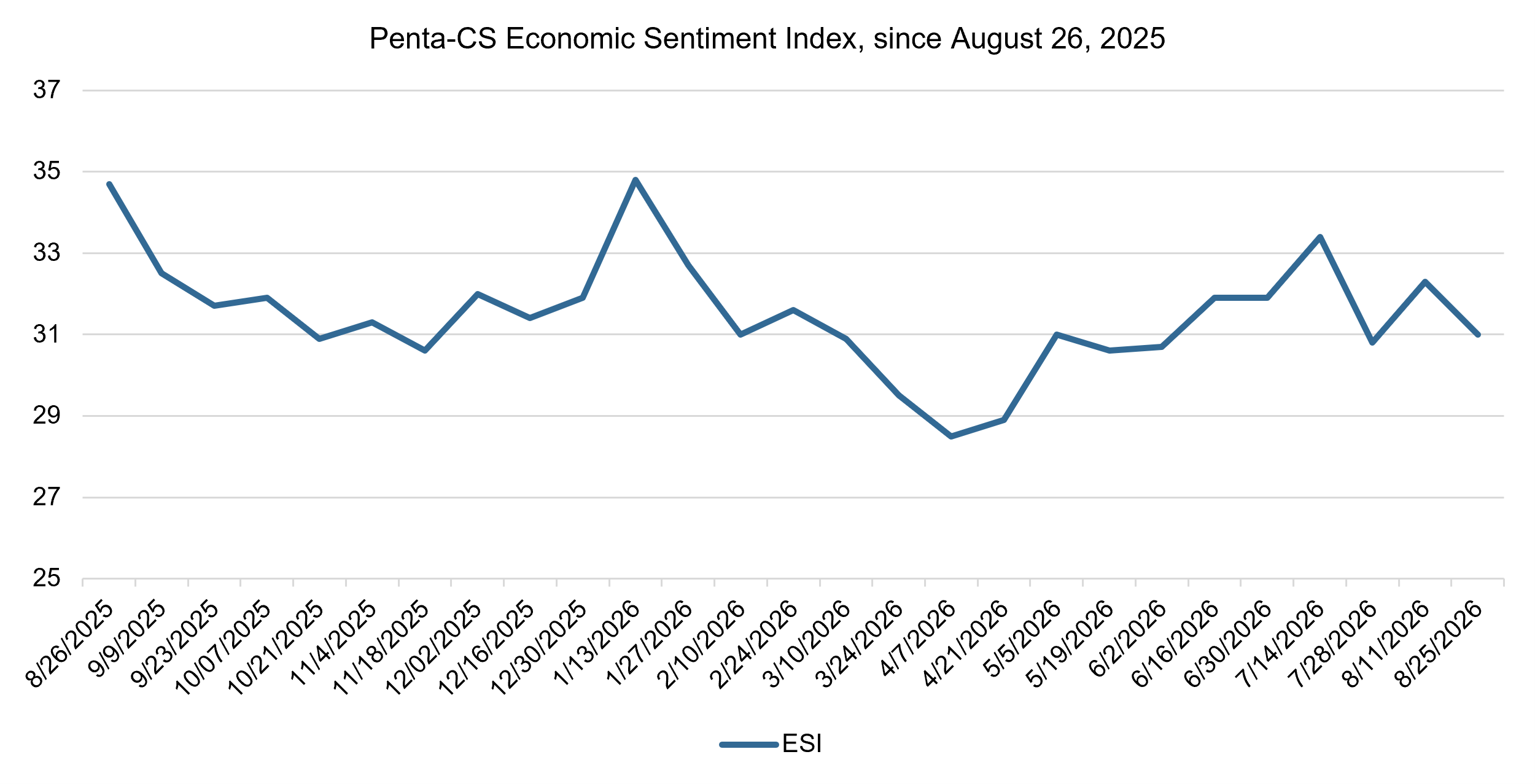
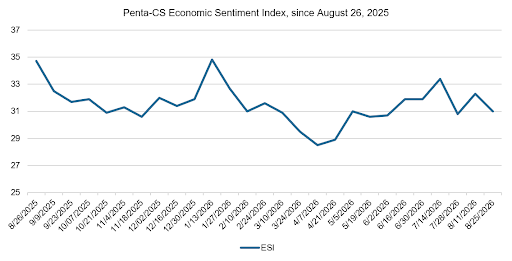
The latest biweekly reading of the Penta-CivicScience Economic Sentiment Index (ESI) decreased 1.3 points to 31.0, reversing some of the gains from the previous period after the U.S. national debt was announced to have exceeded $40 trillion.
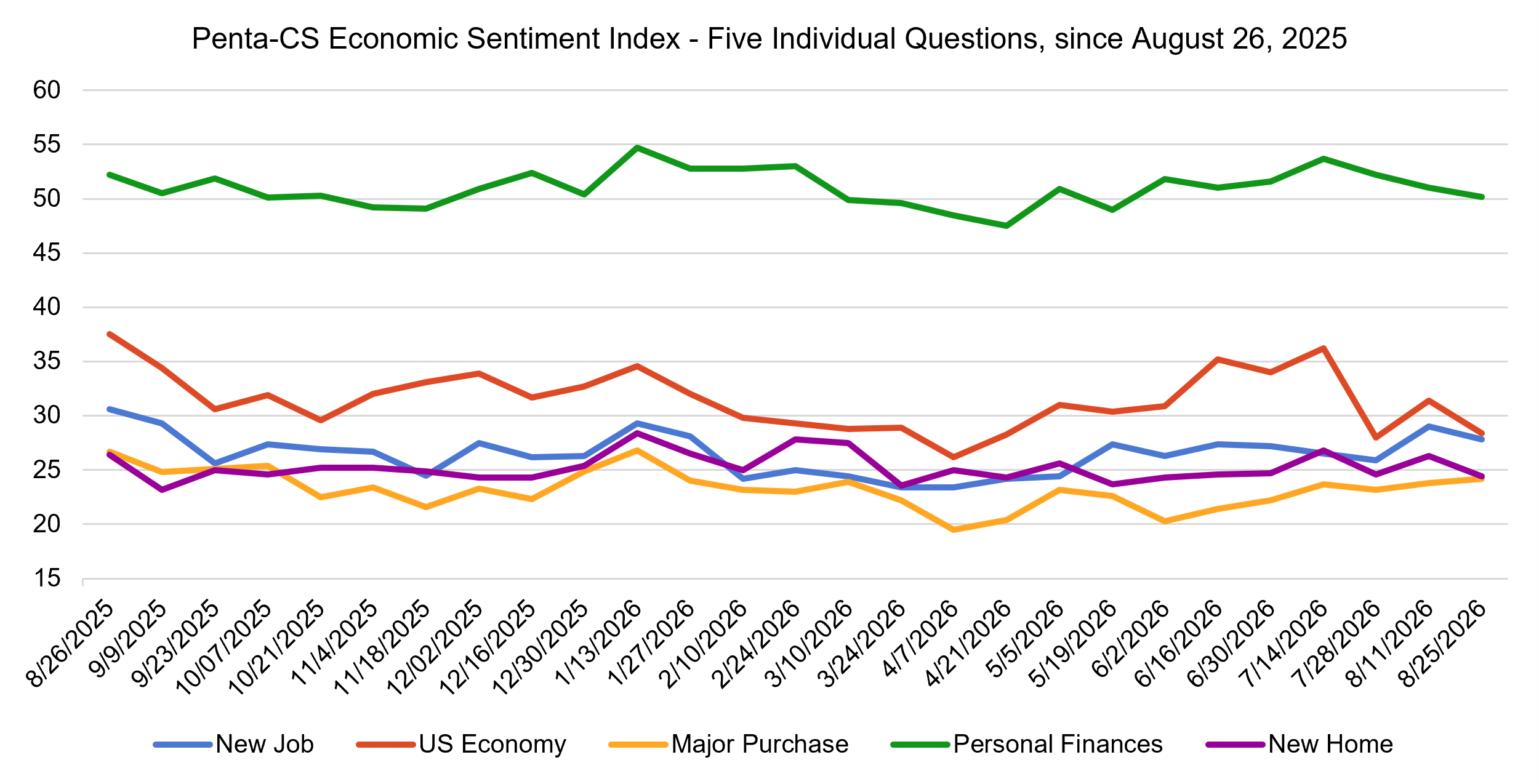
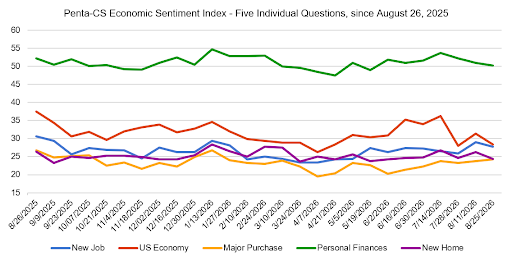
Four of the ESI’s five indicators decreased during this period. Confidence in the overall U.S. economy decreased the most, falling 3.0 points to 28.4.
—Confidence in buying a new home decreased 1.9 points to 24.4.
—Confidence in finding a new job decreased 1.2 points to 27.8.
—Confidence in personal finances decreased 0.8 points to 50.2.
—Confidence in making a major purchase increased 0.4 points to 24.2.
Following news that the U.S. national debt exceeded $40 trillion, the yield on 30-year U.S. Treasury bonds reached 5.34 percent on August 18, its highest level since 2007, amid concerns about persistent inflation, growing federal debt, and the economic effects of the conflict in the Middle East. The selloff pushed borrowing costs higher across the economy and weighed on stocks, particularly technology shares. The Treasury Department responded by doubling the size of planned liquidity-support buybacks for longer-term debt, sending the 30-year yield sharply lower the following day.
Trade uncertainty also increased during the period. The White House implemented 50 percent tariffs on roughly $20 billion of Canadian goods following stalled trade negotiations, including certain alcohol, dairy, and motor vehicle imports. After briefly delaying implementation, the tariffs took effect on August 22, while Canada announced plans for retaliatory measures. Separately, the administration intensified economic pressure on Iran and countries that continue doing business with it. The move, dubbed “Operation Economic Outcast” by Treasury Secretary Scott Bessent, imposes new sanctions that target additional Iran-linked entities and threatens secondary sanctions against countries maintaining financial ties with Tehran.
Earlier in the period, the Bureau of Labor Statistics reported that the July Consumer Price Index (CPI) rose 0.1 percent from the previous month and 3.4 percent from a year earlier, down from a 3.5 percent annual increase in June. Core inflation, which excludes volatile food and energy prices, rose 0.2 percent for the month and 2.5 percent year over year. Energy prices fell 1.5 percent, helping offset increases in shelter and food costs, although they remain nearly 15 percent higher than this time last year. Furthermore, inflation outpaced wage growth for the fourth consecutive month as wages grew 3.2 percent in July.
Consumer spending also weakened in July. The Census Bureau showed that U.S. retail sales fell 0.6 percent, the largest drop in over a year, following a 0.2 percent increase in June. Nevertheless, sales remained 5.0 percent higher than a year earlier. The decline added to signs that elevated prices and borrowing costs may be weighing on consumers even as spending remains above last year’s levels.
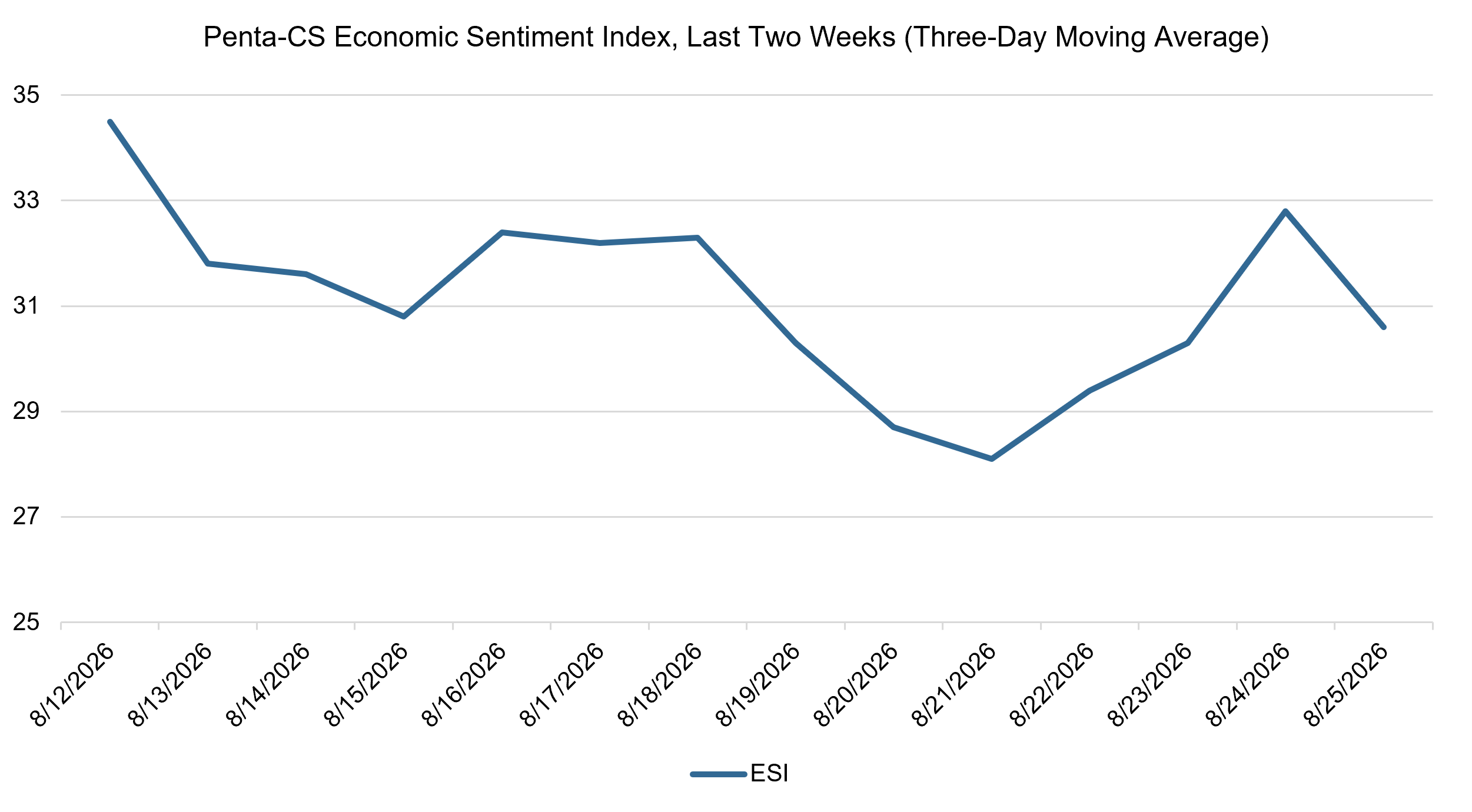
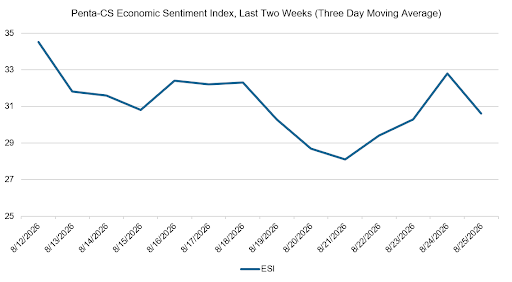
The ESI’s three-day moving average trended downward over the two-week period. It began at a high of 34.5 on August 12 and then fell to 30.8 on August 15 before slightly rebounding to 32.4 on August 16. It remained relatively steady until another decline that began August 19 that reached a period low of 28.1 on August 21. It then climbed to 32.8 on August 24 before falling back down to 30.6 on August 25 to close out the session.
The next release of the ESI will be on Wednesday, September 9, 2026.